
From fragmentation to a unified system:
Learning and teaching at Monash
Project details
Project
Moodle Uplift,
Monash University
Role
Lead Product Designer
Timeframe
6 months
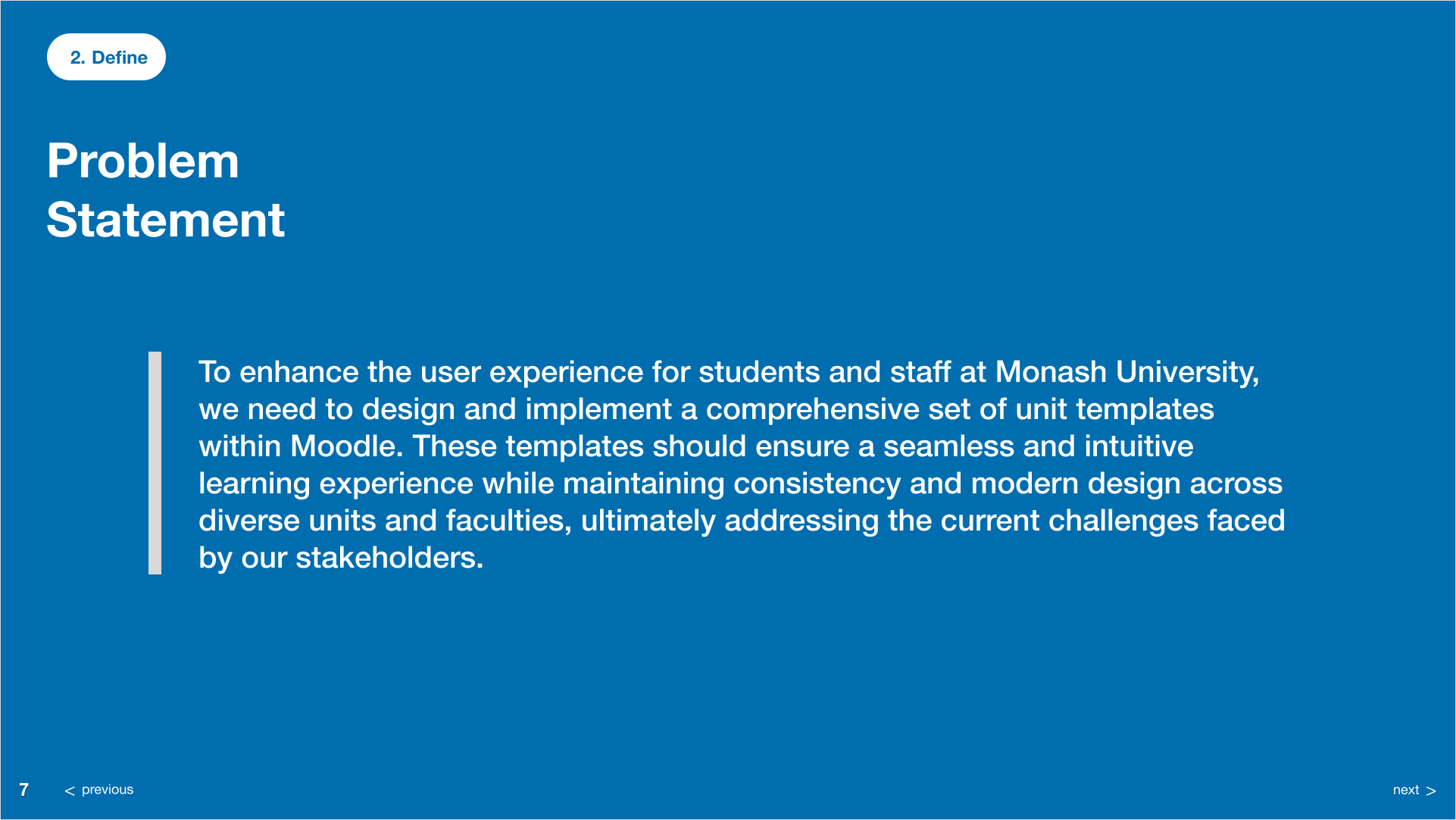
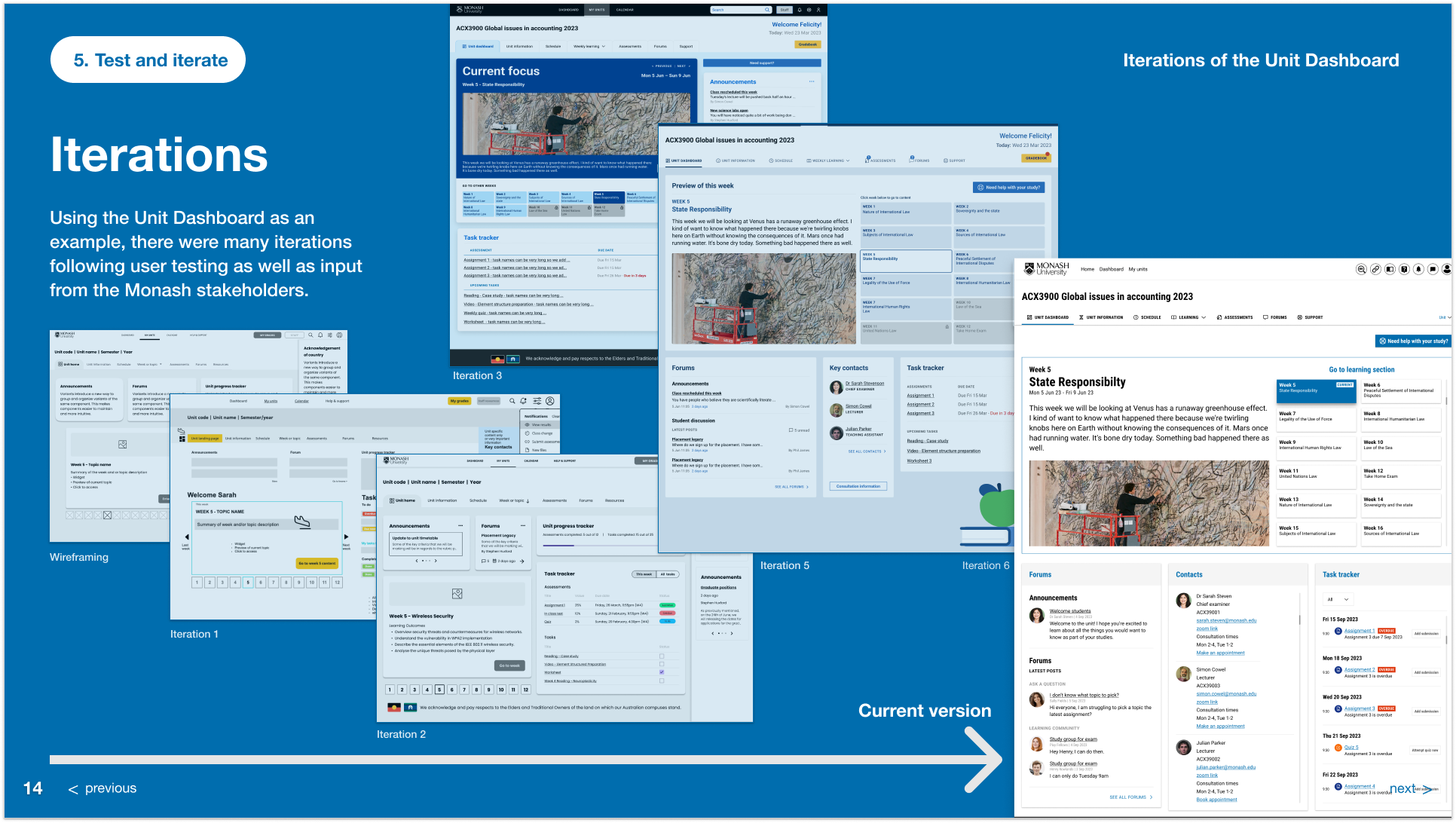
Monash University’s Moodle environment had evolved independently across faculties, resulting in inconsistent structures, duplicated effort, and uneven student experiences. As part of the Digital Learning Uplift programme, this work established a shared, scalable system for how learning is structured and experienced across the platform.
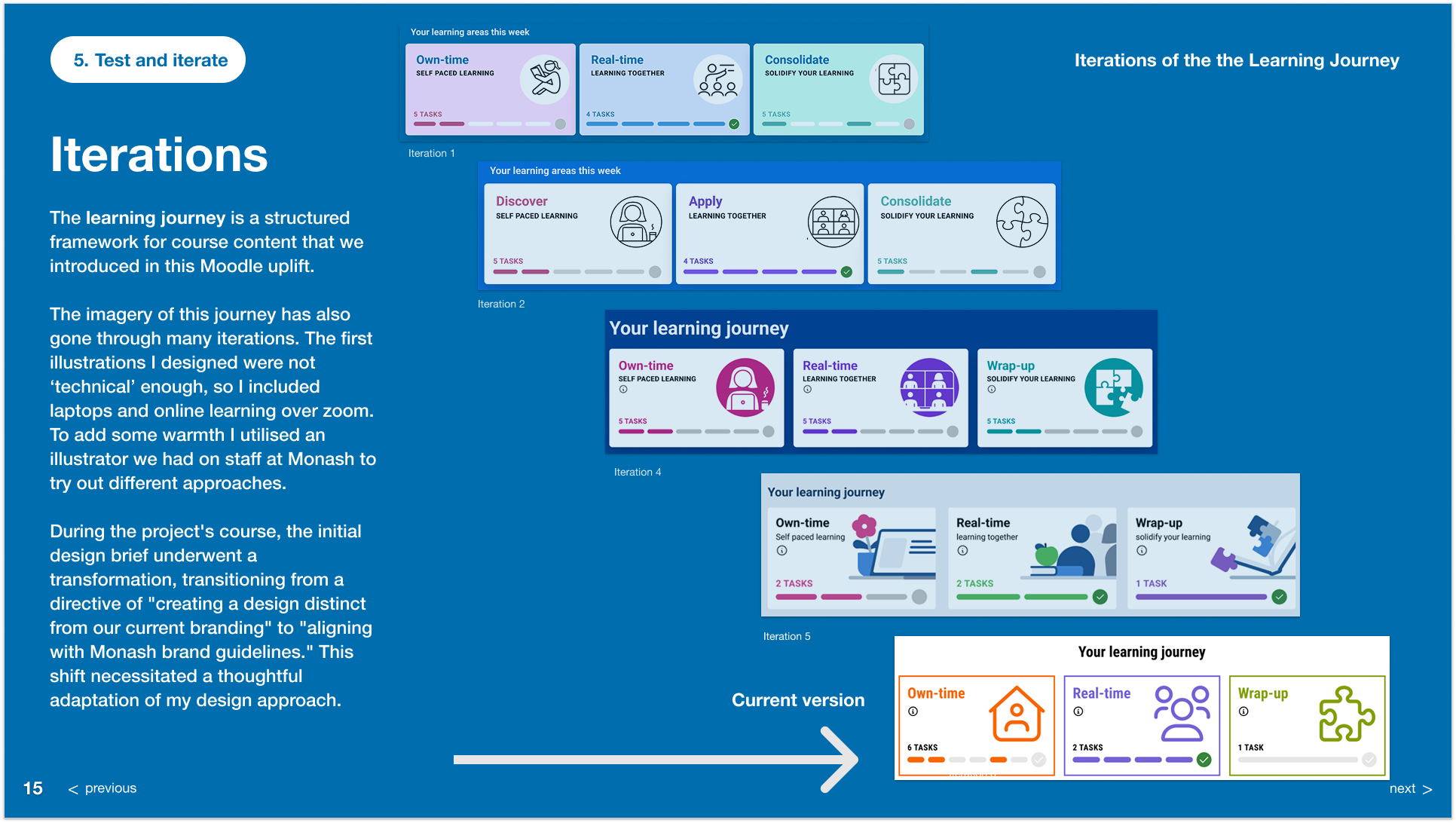
The focus shifted from faculty-specific implementations to a centralised template system, supported by a common learning journey and governed design patterns. The outcome was a more navigable and maintainable digital learning platform used across faculties.
At a glance
System adoption
Multi-faculty rollout
Impact
Replaced multiple faculty-specific unit layouts with one governed core system
Learning standard
University-wide learning journey adopted across faculties
PART 1
Strategy and framing
The outcome
Moodle moved from a collection of faculty-owned layouts to a shared platform with consistent structural patterns. Unit templates provided a common foundation while still supporting different teaching models.
This reduced variation across units, improved student wayfinding, and gave teaching staff a reliable starting point when setting up or maintaining courses.
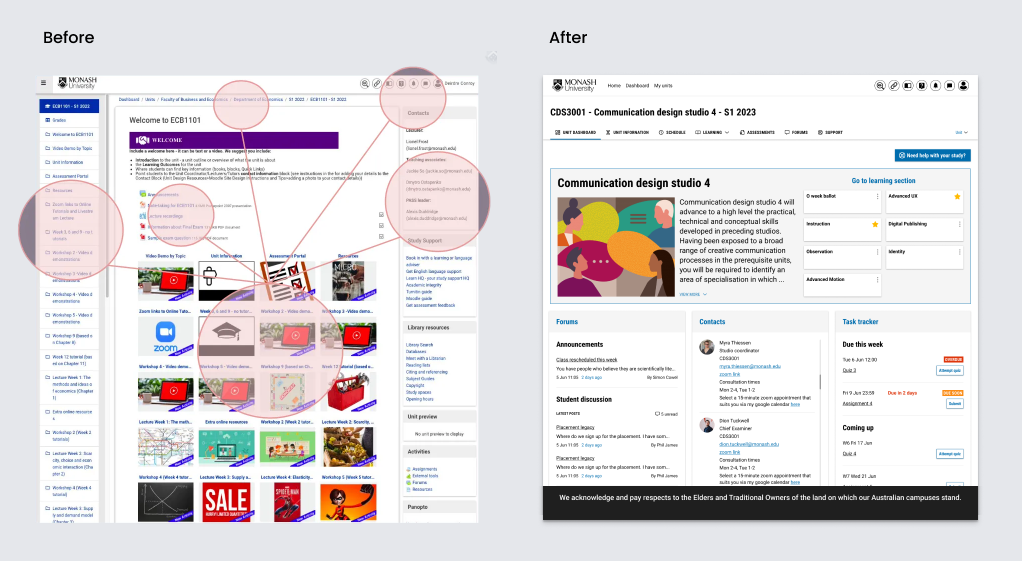
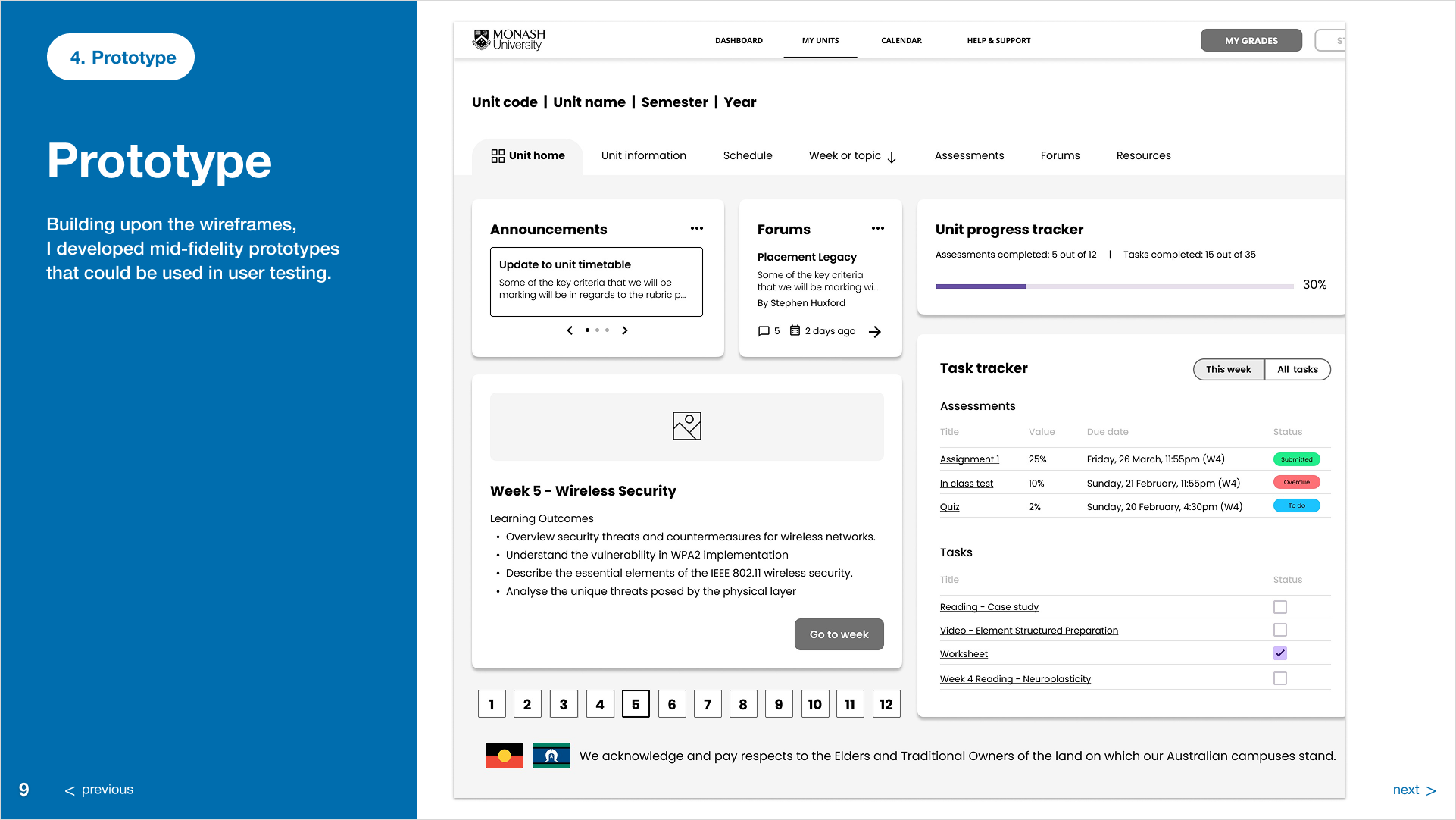
Visual 1 - Transitioning from faculty-led variations to a centrally governed, university-wide model. Side-by-side comparison. Left: legacy unit showing inconsistent navigation and layout. Right: a standardised template with clear hierarchy and predictable structure.
The problem: a fragmented student journey
Moodle’s decentralised model allowed each faculty to design its own unit structure. Over time, this produced wide variation in navigation, hierarchy, and content placement.
Students moving between units encountered different patterns for finding learning materials and assessments. Teaching staff rebuilt structures manually, with no shared baseline to guide consistency.
Observed issues
Navigation and hierarchy varied significantly between units
Learning and assessment content appeared in different locations
No common structural pattern existed to support scale or governance
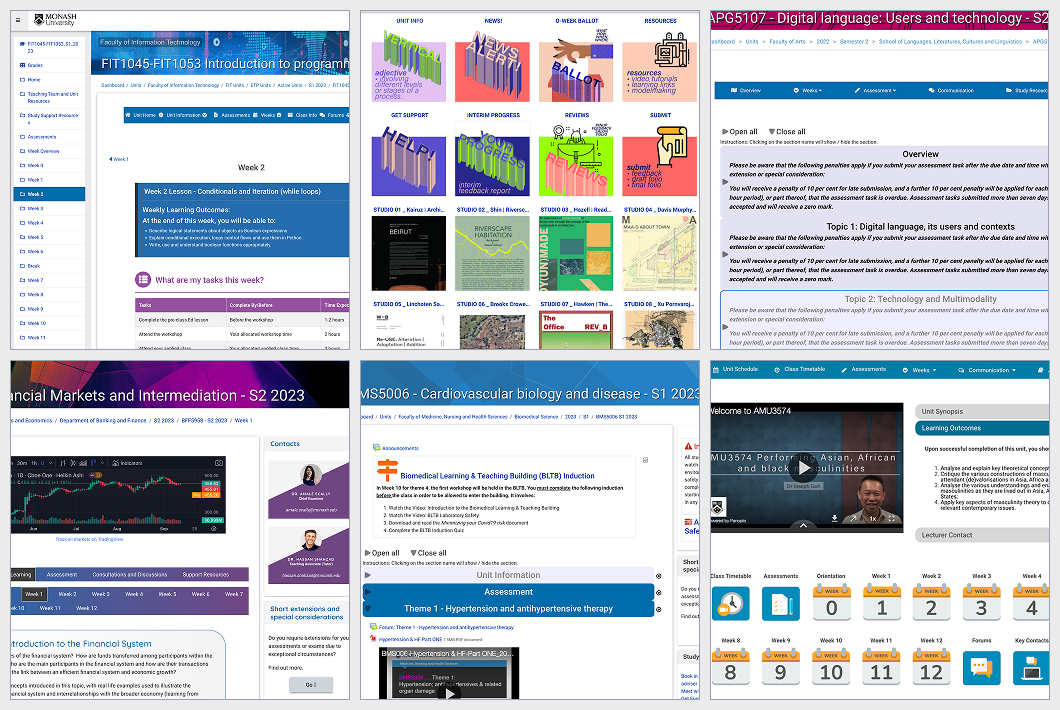
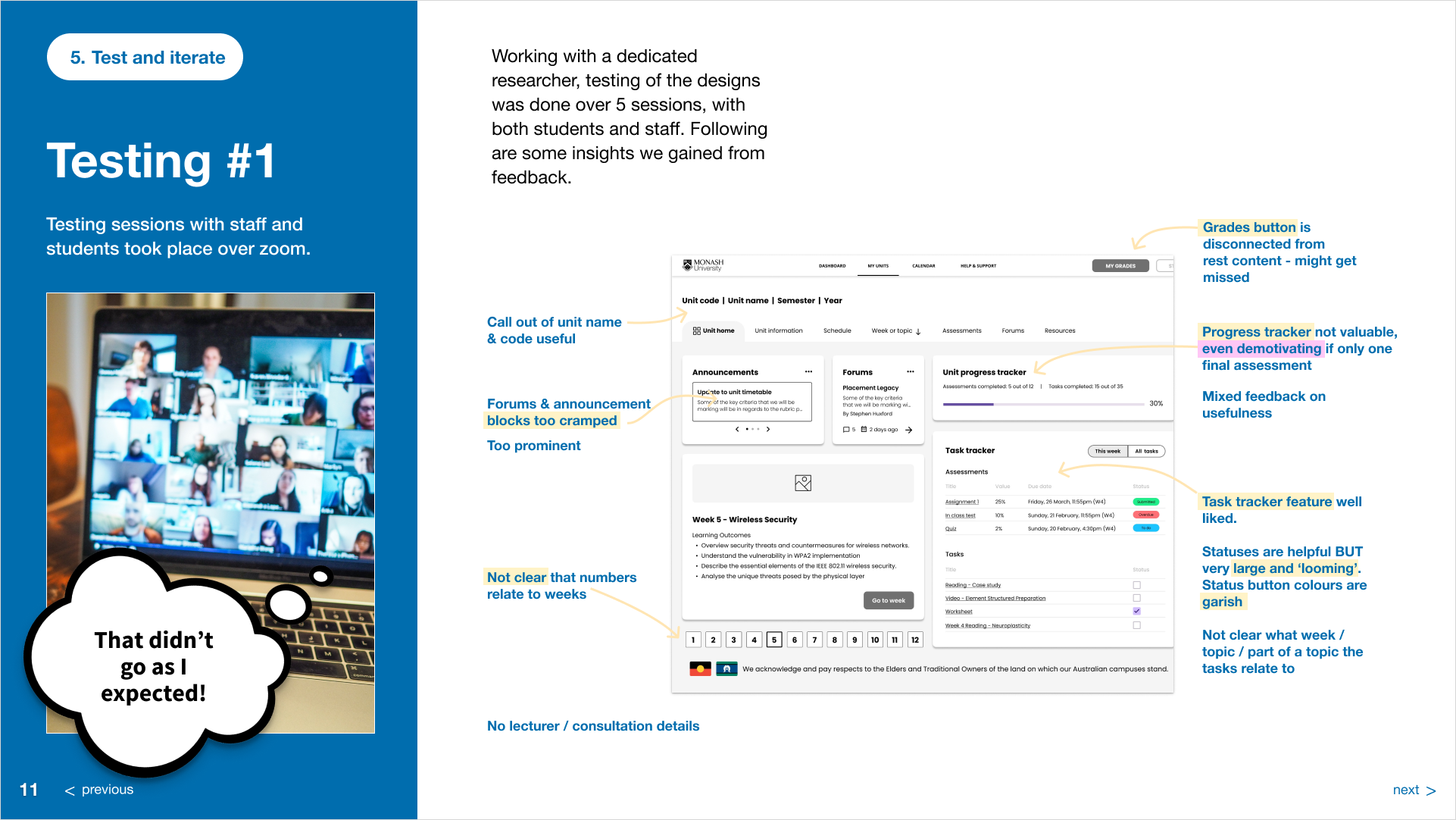
Visual 2 - Evidence snapshot. Audit of existing units showing how inconsistent labels and layouts increased cognitive load for students and created work for lecturers..
Where the experience broke for students
The same friction points appeared repeatedly, regardless of discipline.
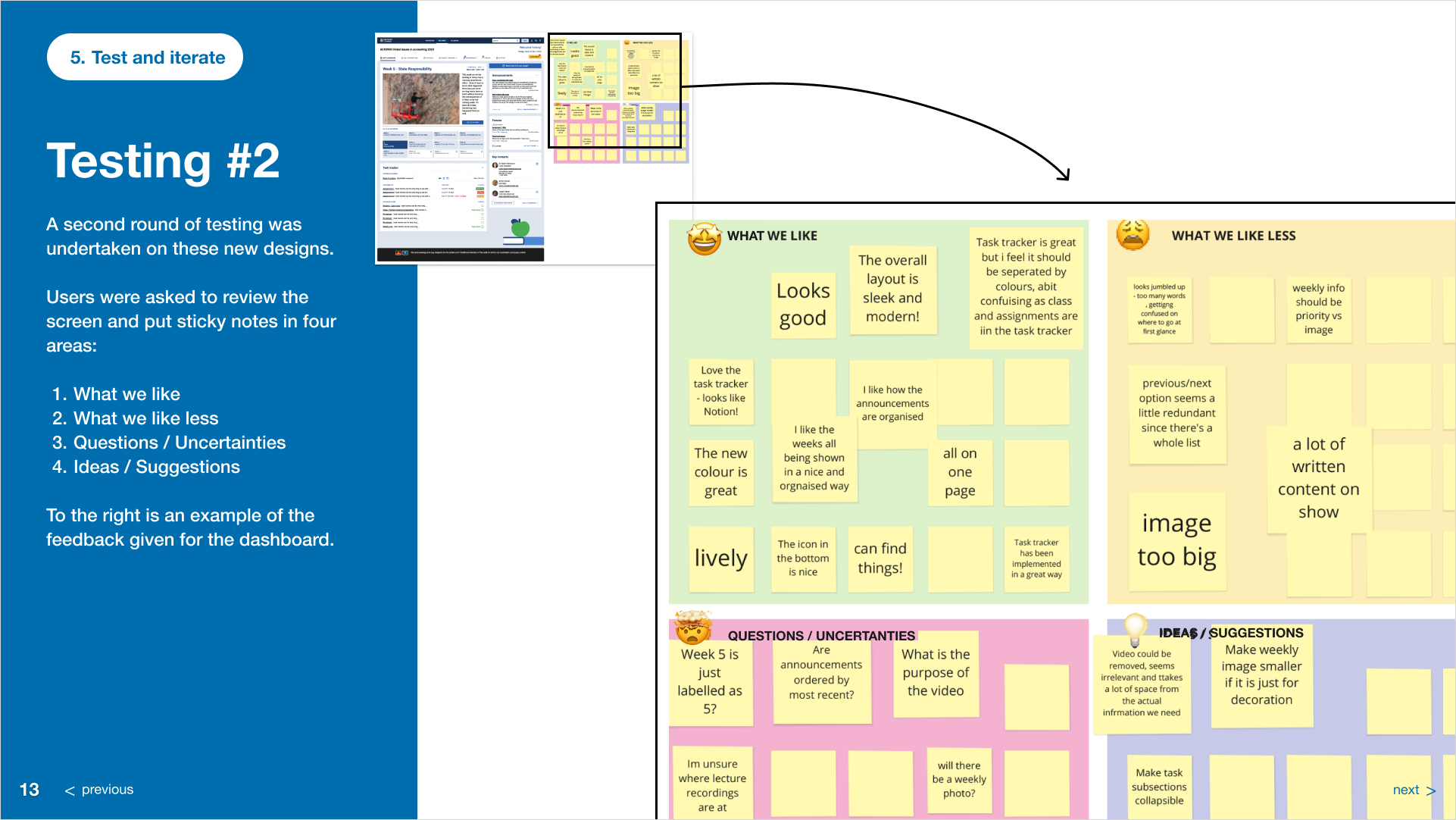
Students struggled most when locating weekly learning, understanding assessment requirements, and tracking progress. These issues highlighted that the problem was structural rather than content-specific.

Visual 3 - Student journey before redesign A simplified view of the student journey, highlighting structural friction caused by fragmented navigation, content, and progress visibility.
Insights from the ecosystem
The problem was not limited to visual design. It reflected how learning platforms operate at scale.
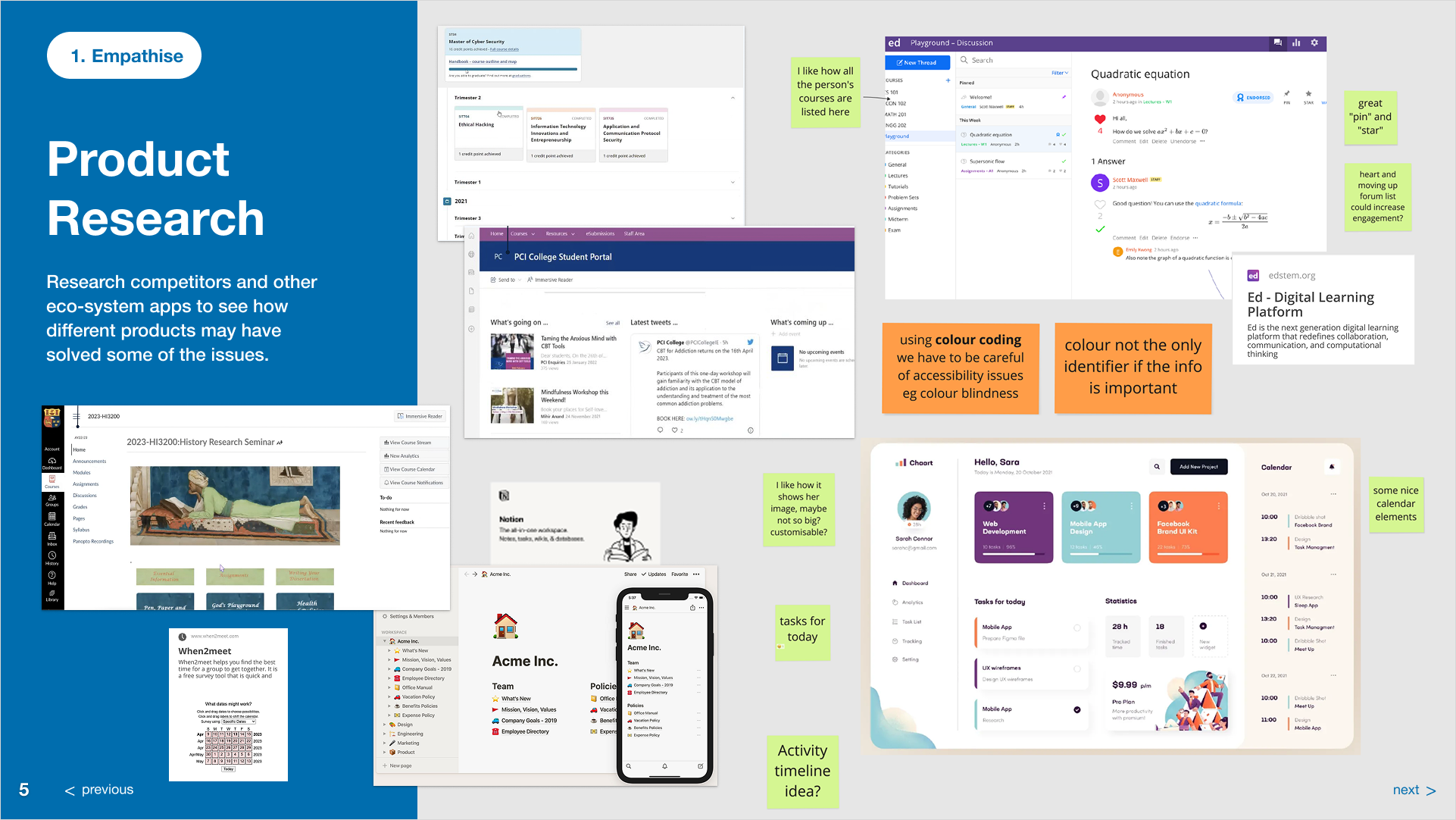
Internal exemplars and external LMS patterns, including Canvas and Blackboard, were reviewed to understand how structure, hierarchy, and pattern reuse support orientation across large institutions.
Key insights
Pattern recognition enables faster orientation
Safe defaults reduce decision fatigue for teaching staff
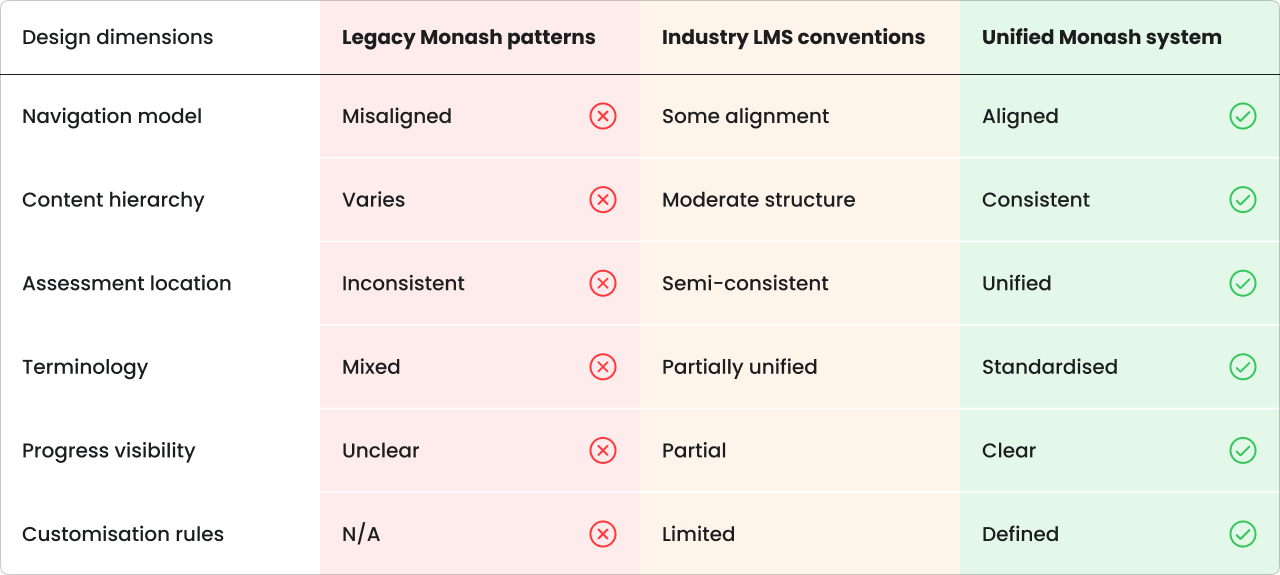
Visual 4 - Structural comparison of learning portals Highlighting the shift from inconsistency to coherence.
Choosing a system-led approach
To address scale, the work moved away from designing individual pages toward designing a system.
The strategy focused on establishing a homogeneous structure governed centrally while accommodating different teaching approaches.
Strategic decisions
Standardise core structures for homepages, modules, and assessments
Prioritise visibility through predictable placement
Constrain customisation to defined zones
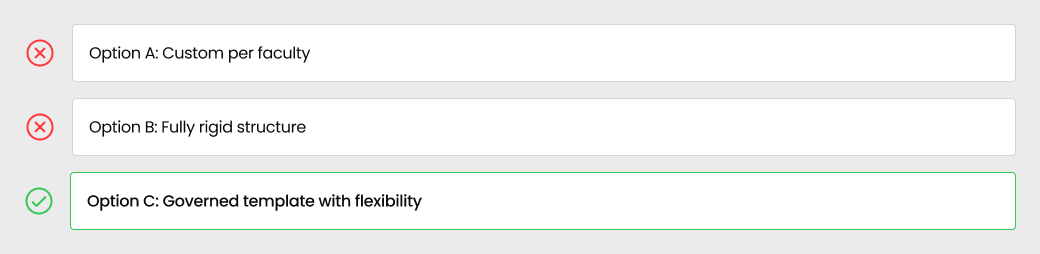
Visual 5 – Decision logic Structural options explored to match student mental models
PART 2
The modular system
Designing a system that could scale
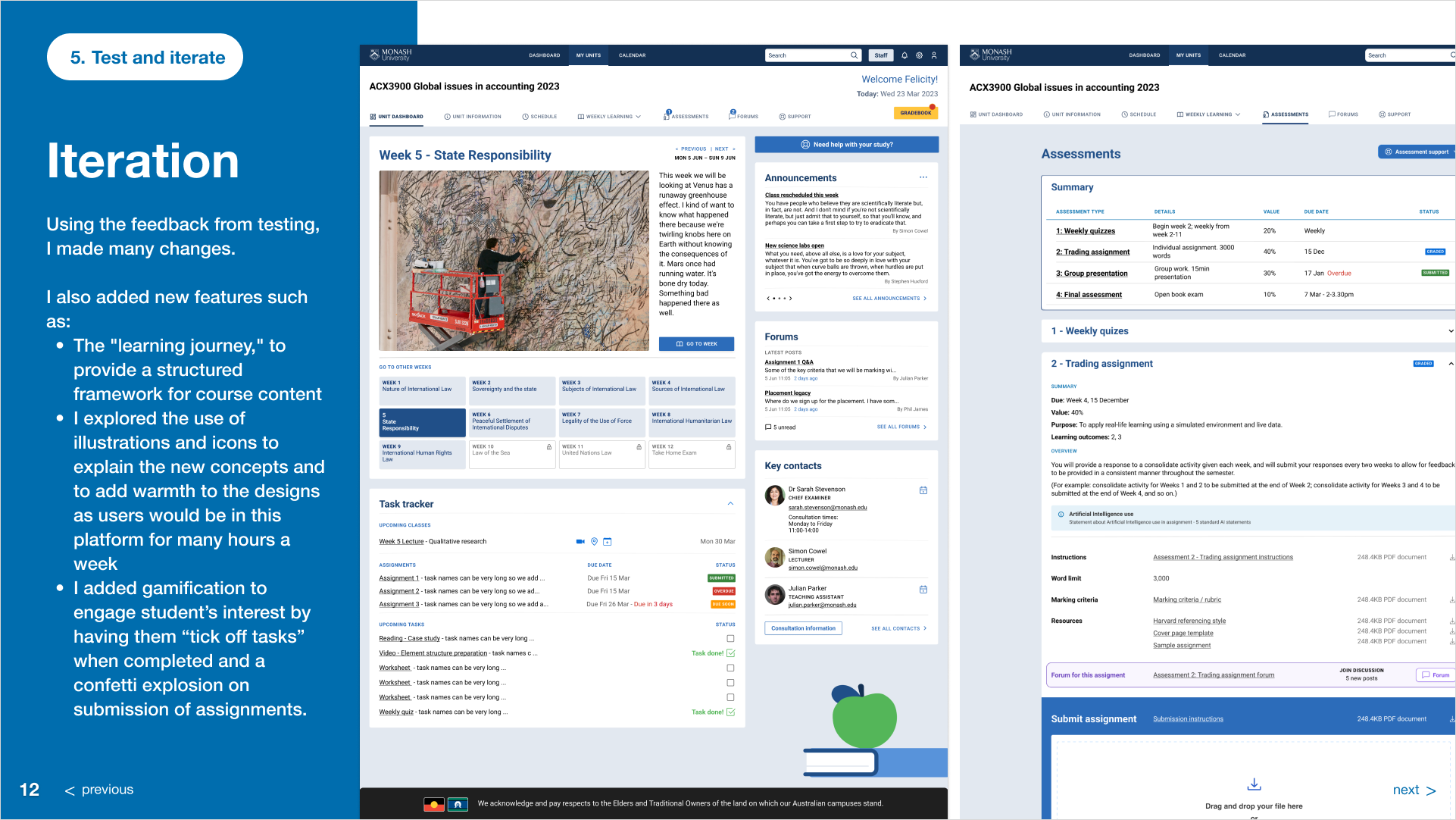
The resulting solution was a modular system providing a repeatable foundation across faculties.
Moodle unit templates aligned to accessibility, usability, and governance requirements reduced variation while maintaining a consistent student experience.
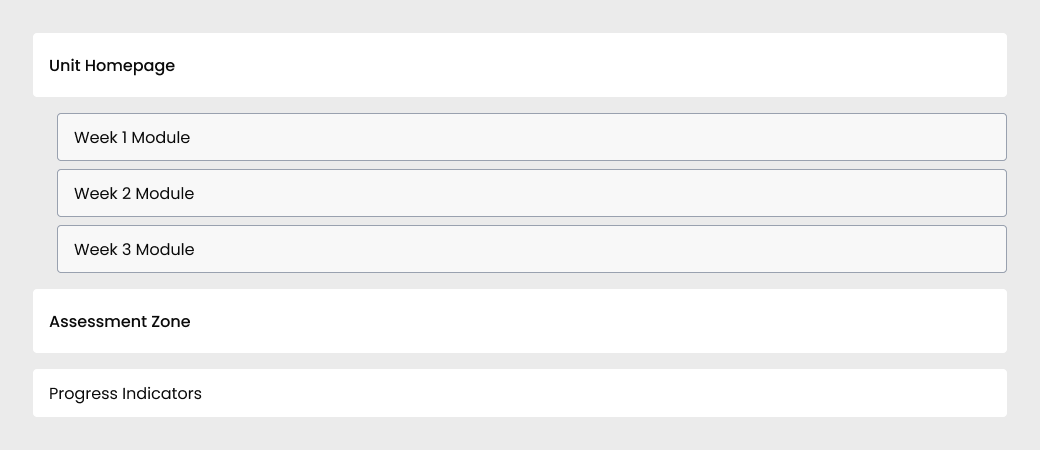
Visual 6 - End-to-end unit flow with consistent structure
Proving flexibility across faculties
To ensure the system worked beyond a single idealised unit, templates were applied across different disciplines.
The underlying structure remained constant while content varied significantly.
Key elements
Weekly learning structure with predictable sequencing
Dedicated assessment zones
Reusable components preserving hierarchy

Visual 2 - Evidence snapshot. Audit of existing units showing how inconsistent labels and layouts increased cognitive load for students and created work for lecturers..
Where the experience broke for students
The same friction points appeared repeatedly, regardless of discipline.
Students struggled most when locating weekly learning, understanding assessment requirements, and tracking progress. These issues highlighted that the problem was structural rather than content-specific.
Visual 3 - Student journey before redesign A simplified view of the student journey, highlighting structural friction caused by fragmented navigation, content, and progress visibility.
Insights from the ecosystem
The problem was not limited to visual design. It reflected how learning platforms operate at scale.
Internal exemplars and external LMS patterns, including Canvas and Blackboard, were reviewed to understand how structure, hierarchy, and pattern reuse support orientation across large institutions.
Key insights
Pattern recognition enables faster orientation
Safe defaults reduce decision fatigue for teaching staff
Visual 4 - Structural comparison of learning portals Highlighting the shift from inconsistency to coherence.
Choosing a system-led approach
To address scale, the work moved away from designing individual pages toward designing a system.
The strategy focused on establishing a homogeneous structure governed centrally while accommodating different teaching approaches.
Strategic decisions
Standardise core structures for homepages, modules, and assessments
Prioritise visibility through predictable placement
Constrain customisation to defined zones
Visual 5 – Decision logic Structural options explored to match student mental models